
Could you explain in simple terms what “Cold Ironing” or On-shore Power Supply (OPS) is, and why it is considered so important for the future of European ports?
The terms Cold Ironing, On-shore Power Supply (OPS), and Shore-Side Electricity System (SSES) refer to the provision of electricity from the port to a vessel while it is docked. The term Cold Ironing dates back to the 19th century, when steamships would shut down their engines and their metal parts “cooled down.” Today, the same principle is applied with modern systems to ensure that ships do not run their engines while in port. This solution significantly reduces emissions and noise, and has become a regulatory requirement under EU Regulations 2023/1804 and 2023/1805, as well as the Fit for 55 strategy, making it critical for the future of European ports.
PROTASIS has participated in numerous European projects. What is the common vision behind them, and what are the key results so far?
All projects involving PROTASIS, such as ELEMED, EALING, CIPORT, ALFION/ALFION-INFRA, CENTAVROS, and DECOMPRES, share the common goal of creating environmentally friendly ports by reducing ship emissions. Implementing Cold Ironing systems allows vessels to be powered by clean electricity while docked.
To date, studies have been completed for two core ports and three comprehensive ports of the Trans-European Transport Network (TEN-T), with additional studies underway for three more comprehensive ports. Moreover, two ports -Igoumenitsa and Rafina- are already moving forward with Cold Ironing system implementation, significantly reducing their environmental footprint.
If you had to highlight a specific project that made you particularly proud, which would it be and why?
It is difficult to choose just one. Although the primary focus of these projects was Cold Ironing system studies, each project contributed uniquely to the green transition of ports. ELEMED was the first project in Greece to pilot Cold Ironing in Kyllini, while ALFION included additional studies for the energy upgrade of Igoumenitsa port. EALING focused on European ports, ALFION-INFRA on Cold Ironing installation at a core port, and the remaining projects contributed through technical studies and infrastructure that reduce environmental impact. Each project posed different challenges and completing them fills us with pride.
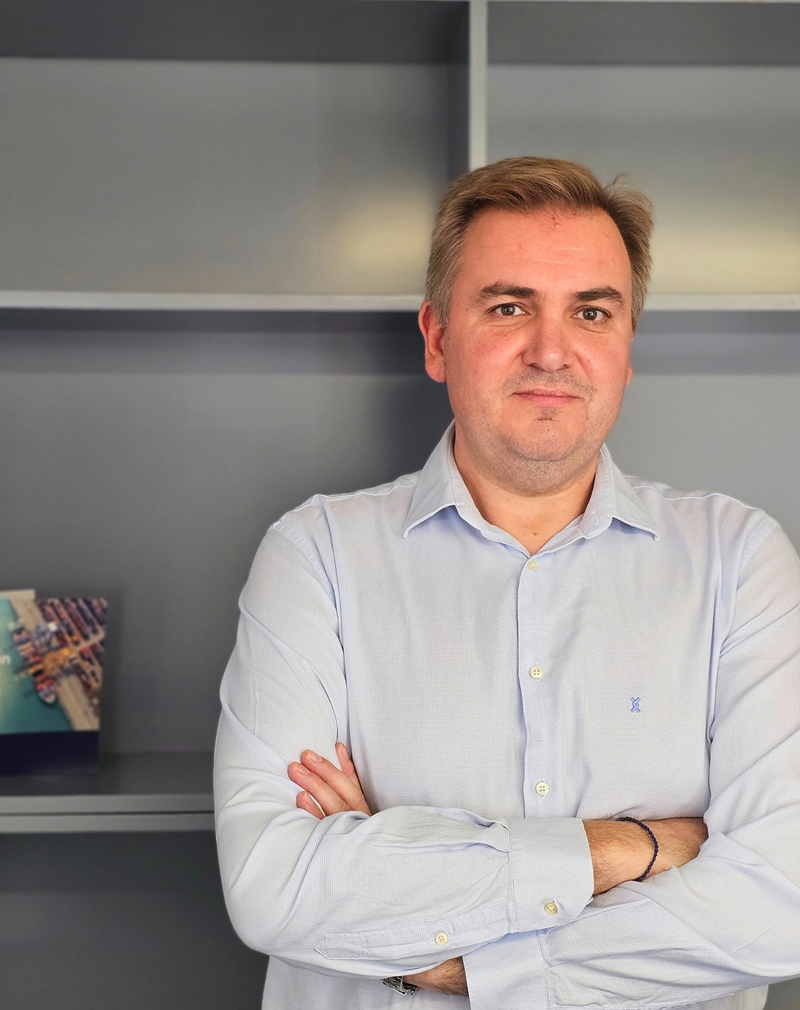 Dr. Stefanos Dallas, Head of EU Projects Division, PROTASIS SA
What challenges did you face, and how did you overcome them?
Every project is a unique challenge due to its scope and the specific characteristics of each port. A decade ago, Cold Ironing was new and approached with caution. Existing port infrastructure, including outdated electrical grids and spatial constraints, required careful traffic analysis and assessment of vessels’ energy needs. Successful implementation demanded interdisciplinary knowledge, technological expertise, and strategic collaboration. The PROTEUS consortium, which includes PROTASIS Engineering and Consulting S.A., HYDRUS Engineering S.A., GATES – Global Transport and Engineering Systems Ltd, and the National Technical University of Athens’ Marine Transport Laboratory, exemplifies such collaboration.
What is PROTASIS’ role in these projects, and how does collaboration within the PROTEUS consortium enhance their success?
PROTASIS primarily handles the necessary studies for port electrical grid upgrades, Front-End Engineering Design (FEED) studies, energy management system design, and technical compliance with international standards. Through the PROTEUS consortium, we have joined forces with leading institutions such as NTUA, HYDRUS, and GATES. This synergy combines expertise in electrical engineering, environmental analysis, strategic planning, and advanced technologies, enabling the successful delivery of highly complex projects.
What are the main environmental benefits of Cold Ironing in ports such as Piraeus, Rafina, or Igoumenitsa?
Cold Ironing systems in ports located within urban areas, like Piraeus, Rafina, and Igoumenitsa, significantly reduce local pollutant emissions (SO₂, NOₓ, PM) and noise from ship generators, while also decreasing CO₂ emissions. The benefits will further increase as the electricity grid becomes greener. The result is cleaner air for residents and passengers, quieter docking environments, and improved urban health and image.
Beyond environmental impact, what are the social benefits for local communities near ports, and how does it affect tourism and daily life?
Cold Ironing systems benefit local communities in multiple ways: reducing air pollution and noise, creating jobs for the operation and maintenance of infrastructure, and promoting the port as a “green” and modern facility, which attracts higher-quality vessels and strengthens the local economy. Cities with such infrastructure are considered more sustainable and “smart,” enhancing their international image and tourism appeal. Port upgrades integrate seamlessly with the urban fabric, transforming ports into centers of development rather than sources of pollution.
How do you see modern ports evolving over the next 5–10 years, and what will PROTASIS’ role be in this transition?
Looking ahead, Cold Ironing is only the first step in transforming ports into “smart energy hubs.” Over the next decade, ports are expected to combine electrification infrastructure with energy storage, renewable energy generation (solar, wind), hydrogen technologies, and advanced demand management tools. This will not only supply clean energy to ships but also enhance local grid stability.
PROTASIS sees its role as a strategic partner in comprehensive port energy management: from designing and implementing technical solutions to integrating with local communities and adopting innovations that reduce carbon footprint. Our goal is to contribute to a sustainable model for shipping and port infrastructure, applicable across Greece and the broader Mediterranean.

