
A 257-kilometre cycling route makes energy management a very practical concern. How much effort can a rider sustain? When should they push harder? And how will the decisions, that were made early in the ride, affect the kilometres still ahead?
The participation of PROTASIS CEO Vassilis Georgiou in the Spartakiada offers an opportunity to explore these questions from a perspective beyond our everyday work in electrical energy systems.
Connecting Athens with Sparta, the annual event starts at the historic Panathenaic Stadium and finishes at the statue of King Leonidas. Its demanding distance calls for preparation, endurance and careful pacing.
Energy, power and the importance of timing
Cycling makes the distinction between energy and power tangible. Energy determines how much work can be done; power describes the rate at which that work is performed.
A rider may have the reserves needed to cover a long distance, yet still be unable to sustain the power required for a particular pace or climb. Equally, the ability to produce a short burst of high power says little about the ability to maintain effort over several hours.
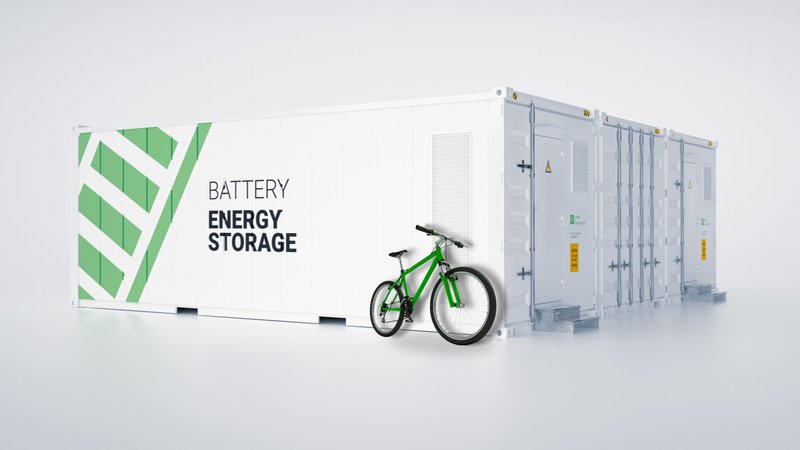
This distinction has a familiar counterpart in battery storage. A battery’s energy capacity describes how much energy it can store, while its power rating defines the rate at which it can deliver or absorb that energy. Both matter, and neither alone provides a complete picture of what the system can do.
The comparison has its limits: human performance also depends on physiology, fueling, hydration and recovery. But it provides an accessible way to understand why managing energy involves both quantity and timing.
Decisions that shape the rest of the route
On a long ride, each decision affects the options available later. Increasing the pace may save time now while making the remaining distance harder to manage. Conserving effort may preserve the ability to respond to a demanding section ahead.
Effective pacing therefore requires a view of the whole route. The rider must balance immediate demands with what is still to come, adjusting as conditions change.
Measurements can support those choices. Power, heart rate and speed each provide useful information, but their meaning depends on context. The same speed may require very different effort on a sheltered road and into a headwind. A number becomes useful when it helps the rider understand the situation and decide how to respond.
From individual performance to coordinated operation
At PROTASIS, these questions take a different form, but the importance of timing, context and coordination is familiar.
In a system combining renewable generation, battery storage and consumption, having sufficient resources is only part of the challenge. Those resources must also be available at the right time and operate within power limits, grid connection constraints and other technical requirements.
For example, discharging a battery to meet an immediate demand reduces the energy available for a later need. If a period of high demand is expected before the battery can recharge, retaining an appropriate energy reserve may be necessary. The decision depends on the anticipated generation and consumption, the battery’s operating limits and the priorities of the site.
This is where measurement, control and energy management come together. Measurements establish the operating picture. Control systems execute responses. Energy management coordinates resources according to current conditions, anticipated needs and operational priorities.
Reliable operation requires decisions that account for the wider system and preserve its ability to respond as conditions evolve.
The energy behind the journey
The Spartakiada brings these ideas into a human setting. Across 257 kilometres, preparation meets changing conditions, and individual decisions become part of a much longer effort.
Vassilis Georgiou’s participation offers a personal connection to a subject central to PROTASIS. It also provides a reminder of why energy management matters: performance depends on how effectively available resources are used throughout the journey.
